
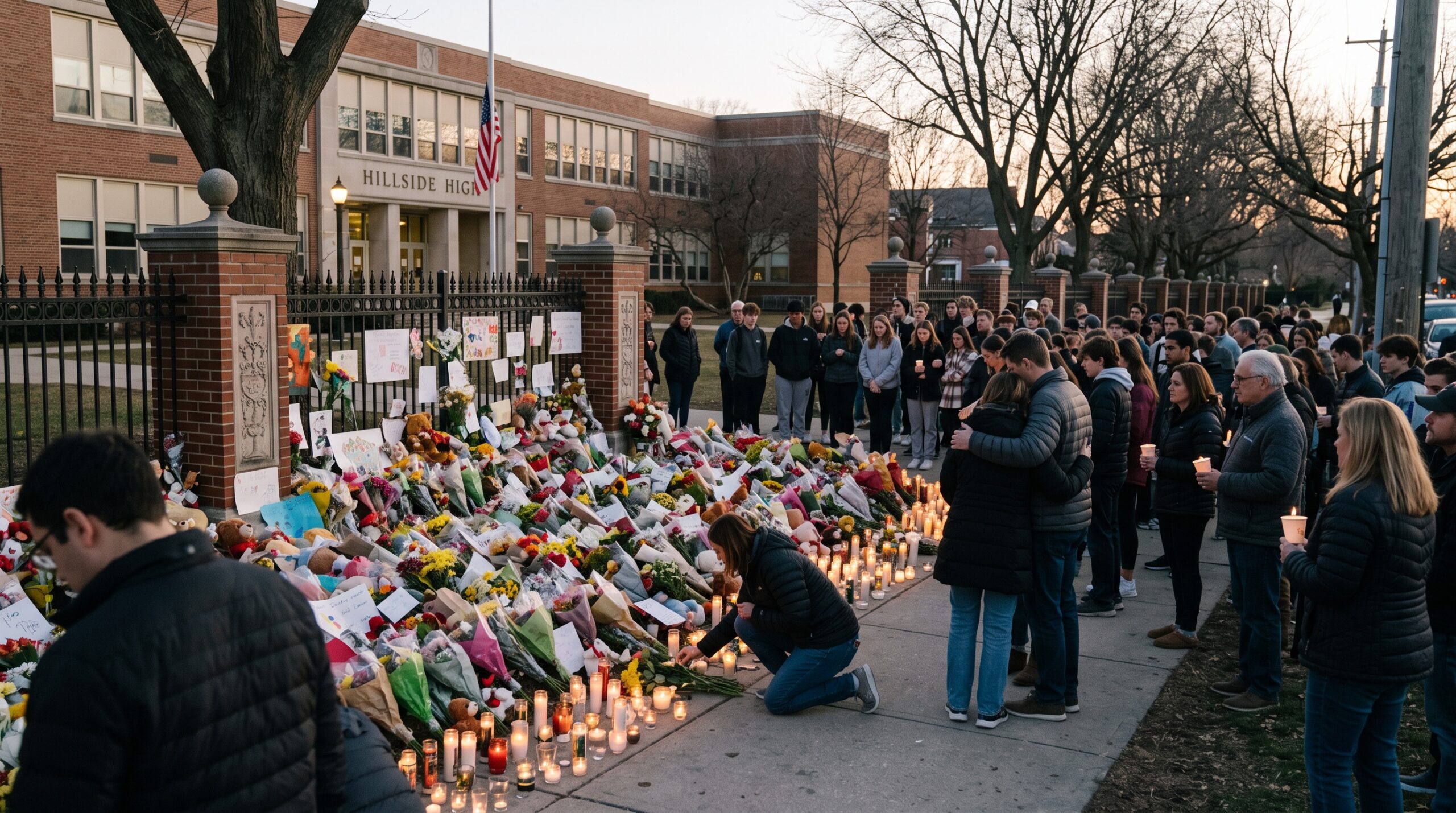
You hear the first reports of a shooting at an elementary school and the clock starts in your head. How long until someone stops it? How many people get hurt in those first minutes? On October 15 in Bend, Oregon, those minutes proved decisive.
A 16-year-old entered Silver Rail Elementary School and opened fire. Three children, ages 5, 8, and 11, and one teacher were killed. A 7-year-old student and another teacher were critically injured. The attack ended when a community member who saw the teenager enter the building followed him inside and stopped the threat before police fully arrived.
The entire sequence from the first 911 calls to the shooter being neutralized lasted only a few minutes. That compressed timeline is now the focus of intense discussion about school safety, response speed, and the role of immediate intervention.
The Timeline That Defined the Outcome
Police received the first calls around 12:59 p.m. Reports described shots near the school and then an individual entering the building. Officers arrived at approximately 1:02 p.m. By then the armed bystander had already engaged the shooter inside.
Bend Police Chief Mike Krantz confirmed that a community member saw the suspect enter, pursued him, and stopped the attack. The bystander was legally carrying a concealed firearm. Law enforcement sources later noted that this action prevented additional casualties.
The speed matters. In many past school shootings the longest delays occur between the first shots and the arrival of trained responders. Here that window closed unusually fast because someone on scene acted immediately.
What Rapid Intervention Changed
Every second an active attacker remains free increases the risk to people nearby. In this case the intervention limited the duration of the threat. Officials have stated that the bystander’s actions stopped further loss of life.
This does not erase the tragedy. Four people still died and two more were seriously hurt. It does illustrate the difference between a longer event and one that ends within minutes. Response time is one of the few variables that can still be influenced once an attack has started.
School safety experts have long studied the “seconds matter” principle. The Bend incident provides a real-world example of how quickly a threat can be interrupted when someone is both present and prepared to act under extreme stress.
The Role of the Armed Bystander
The individual who stopped the shooter has not been publicly identified. Reports indicate the person was a community member, possibly a parent, who was legally armed. Police have described the action as decisive.
This element of the story has sparked wider conversation. Some view it as evidence that trained or permitted civilians can fill critical gaps before professional responders arrive. Others caution that introducing more firearms into school environments carries its own risks and requires clear training, legal frameworks, and accountability.
Both perspectives deserve serious examination. The Bend case shows one outcome. It does not settle the larger policy debate. What it does confirm is that the presence of someone willing and able to intervene altered the course of the event.
Broader Lessons for School Safety Systems
Physical security measures at Silver Rail, including locked doors, were in place. The shooter still forced entry. That fact underscores a recurring challenge: barriers slow attackers but rarely stop a determined individual completely.
Layered security remains essential. Locked doors, controlled access points, surveillance, and rapid notification systems all buy time. The Bend response shows that time must then be converted into action. Training for staff, clear lockdown protocols, and coordination with local law enforcement continue to matter.
Mental health support for the community is already underway. Crisis counselors have been made available. The Bend-La Pine school district canceled classes the following day. These steps address the immediate human cost while longer-term prevention work continues.
Policy Questions the Incident Raises
Lawmakers and school leaders will examine several issues in the coming weeks. How should schools balance access control with emergency response needs? What role, if any, should trained civilians play in immediate threat response? How can threat assessment programs better identify and intervene with at-risk individuals before violence occurs?
No single incident answers these questions. Each event adds data. The short duration of the Bend attack will likely be cited by those who emphasize rapid neutralization. The loss of young children and a teacher will be cited by those who emphasize prevention and upstream interventions.
Both approaches can coexist. Better prevention reduces the number of attacks that ever begin. Faster interruption reduces harm when prevention fails.
Supporting the Bend Community
The families of the victims, the injured, the students, and the staff are dealing with profound trauma. Local officials have prioritized mental health resources. Community members have gathered to support one another.
For people following from a distance, the most useful response is often practical. Donate to verified local funds if they are established. Avoid spreading unverified information. Give the investigation space to proceed without speculation about motive or identity before facts are confirmed.
School shootings leave long shadows. The work of recovery takes far longer than the event itself.
Moving Forward With Clear Eyes
The armed bystander’s intervention in Bend compressed the timeline of violence in a way that few recent school attacks have seen. That fact is now part of the public record. It does not make the deaths any less devastating. It does provide a concrete case study in how quickly a threat can be stopped when someone acts without delay.
School safety will continue to involve physical design, trained staff, law enforcement partnerships, threat assessment, and community awareness. The Bend shooting adds one more data point to that ongoing effort: when intervention happens in the first minutes, the outcome can change.
The children and teacher who were killed deserved to be safe at school. The community that responded in those critical minutes showed what immediate action can achieve. Both realities must shape what comes next.
FAQ
1. What happened at Silver Rail Elementary School in Bend, Oregon?
On October 15, 2026, a 16-year-old entered the school and opened fire, killing three children (ages 5, 8, and 11) and one teacher. A 7-year-old and another teacher were critically injured. An armed bystander stopped the shooter within minutes.
2. How was the shooter stopped?
A community member who saw the teenager enter the school followed him inside and engaged him, ending the threat before police fully arrived on scene.
3. Was the bystander legally armed?
Yes. Reports from law enforcement sources state the individual was legally carrying a concealed firearm.
4. What is known about the timeline?
First 911 calls came in around 12:59 p.m. Police arrived at approximately 1:02 p.m. By that point the bystander had already stopped the shooter.
5. What support is available for the Bend community?
Crisis counselors have been made available, classes were canceled the following day, and local officials are coordinating mental health resources for students, staff, and families.
Leave a Reply