
You’ve been there. Water backs up in the kitchen sink at 11 p.m. The bathroom drains slow to a crawl. Then the real panic hits—sewage smell, gurgling pipes, or worse, a basement flood. You call around. Half the plumbers are booked solid. The ones who answer quote numbers that make your stomach drop. That frustration is not random. It is the daily reality for millions of homeowners and business owners right now.
Aging pipes, denser cities, heavier grease loads from modern kitchens, and years of deferred maintenance have created a structural shortage of reliable drain and sewer help. The people who solve those problems fast are booking solid schedules and collecting strong margins. A drain cleaning business sits right in the middle of that gap. This is not a trendy side hustle. It is a practical, high-demand home service business idea that keeps working when other industries slow down.
If you have been looking for a high-demand trade 2026 opportunity that does not require a tech degree or a Silicon Valley network, keep reading. We will walk through the real numbers, the startup path, the equipment that actually matters, and the moves that separate the operators who build something lasting from those who burn out after six months.
Why Drain and Sewer Work Keeps Growing While Other Services Stall
Pipes do not care about interest rates or election cycles. They clog when roots grow, when grease solidifies, when hair and soap scum build up, and when decades-old clay or cast-iron lines finally give way. The U.S. septic, drain, and sewer cleaning services market reached roughly $8.7 billion in 2026. Industry data shows steady multi-year growth driven by aging infrastructure and higher hygiene expectations that stuck around after the pandemic years.
Global sewer and drain cleaning services are tracking similar trajectories, with projected compound annual growth rates in the 5–6.6% range through the early 2030s. Urbanization adds new buildings. Older neighborhoods keep the repair work coming. Commercial kitchens, apartment complexes, and municipal systems all need recurring attention. That mix creates both emergency calls and scheduled maintenance contracts—the combination that stabilizes cash flow.
I once talked with a guy who left a corporate facilities job in 2023 to run a one-truck drain outfit. His first year was mostly residential emergencies. By year three he had three commercial contracts that paid every month whether anyone called or not. The emergency work still came, but the contracts smoothed the slow weeks. That pattern repeats across the trade. Demand is not seasonal in the way lawn care or pool opening is. It is structural.
The Real Profit Picture Behind a Drain Cleaning Business
Margins tell the story better than hype. Drain cleaning routinely delivers 50–70% gross margins because material costs stay low once you own the equipment. Labor and truck time dominate the expense side. A typical residential main-line clearing might run $250–$500. Hydro-jetting a grease-laden commercial line can land between $500 and $1,500 or more depending on access and severity. Camera inspections add another $250–$550 and often lead directly to higher-ticket repair work.
Operators who keep one truck busy can target $150,000 in annual revenue with 60–70% gross profit on the work itself. Net margins after all overhead, insurance, marketing, and owner pay commonly land in the mid-teens to low twenties for well-run shops. Specialty focus on sewer lines and jetting tends to outperform general plumbing shops that chase every faucet and water heater.
The math works because customers feel urgency. When water is rising or the toilet will not flush, price resistance drops. You still need transparent pricing and clean communication, but the service itself carries natural pricing power that many other home services lack.
What It Actually Costs to Launch a Sewer Cleaning Startup
You do not need a warehouse or a six-figure equipment fleet on day one. Realistic startup capital for a solid one-truck operation sits between $25,000 and $60,000. A reliable used van or truck runs $15,000–$30,000. A quality hydro-jetter costs $3,000–$10,000. A sewer inspection camera system runs $4,000–$12,000. Add licensing, insurance, basic tools, truck branding, and a few months of working capital and you land in that range.
Licensing varies by state. Many places require a plumbing contractor license or a specialty drain license. Insurance is non-negotiable—general liability, commercial auto, and workers’ compensation once you hire. Form an LLC early. Keep the books clean from the first job. Those steps protect you and make later financing or sale far easier.
Some operators bootstrap even leaner by starting with a heavy-duty snake and basic camera, then adding the jetter once cash flow appears. Others finance the jetter and camera through equipment lenders so the monthly payment sits inside the job pricing. Either path works if you stay disciplined on overhead.
Step-by-Step Path to Getting Your First Paying Jobs
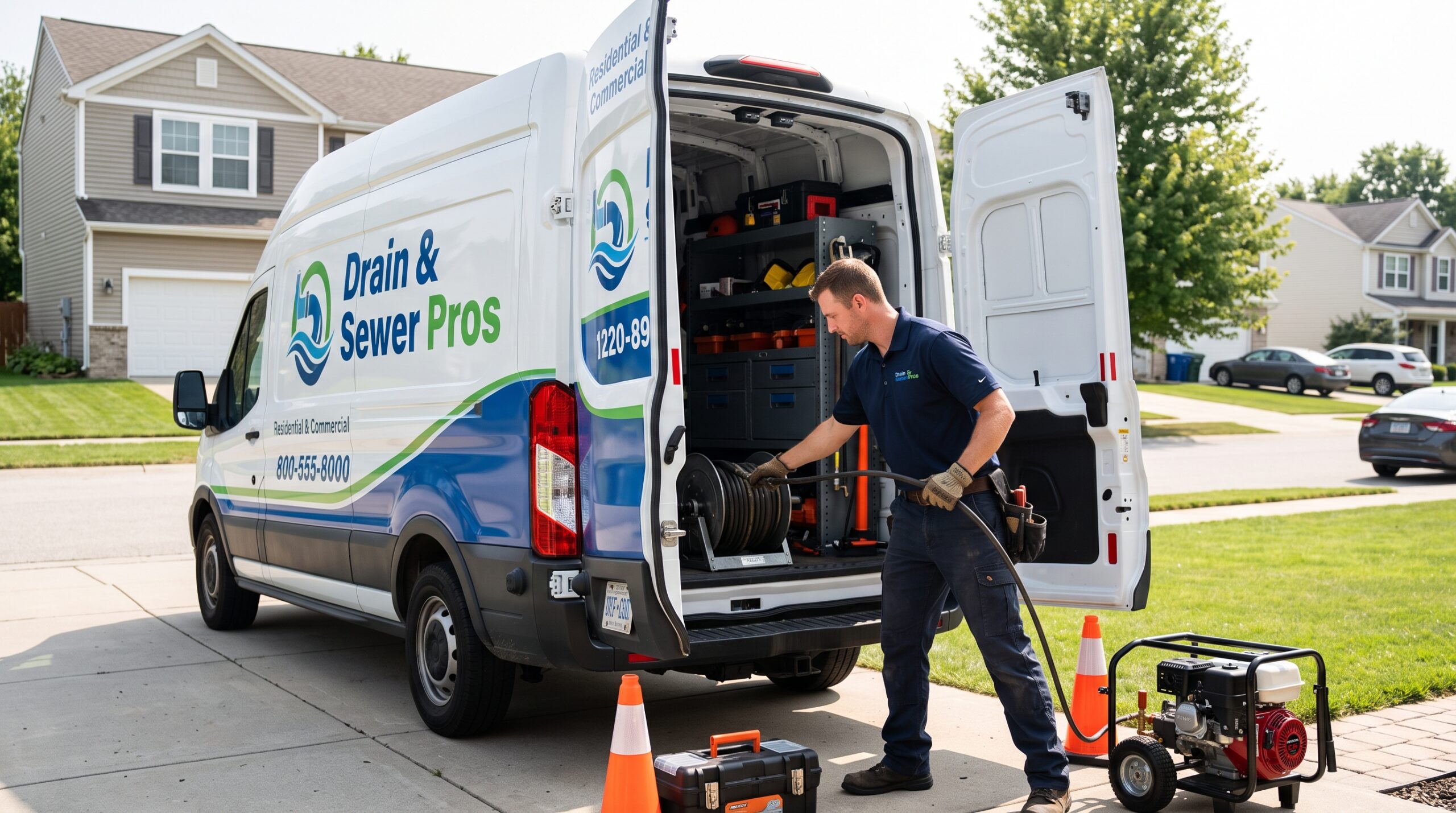
Start with local knowledge. Map the neighborhoods with older housing stock, the restaurant corridors, and the apartment complexes that sit on aging laterals. Those are your primary targets. Get the licenses and insurance in place before you take the first call. Then build a simple online presence—Google Business Profile, a clean one-page website with real photos of your truck and equipment, and clear service pages for residential drain cleaning, sewer jetting, and camera inspections.
Price the common jobs and publish ranges so customers know what to expect. Answer the phone yourself in the early months. Speed and professionalism win more jobs than fancy ads. Once you clear a few residential emergencies cleanly, ask for reviews and referrals. Those early five-star reviews compound faster than almost any paid campaign.
Commercial work follows a different rhythm. Walk into restaurants and property management offices with a short one-pager that explains grease-line maintenance and the cost of a backup versus a scheduled clean. Offer a free camera inspection of their main line as the foot-in-the-door move. Many will convert to quarterly or semi-annual contracts once they see the video of the buildup.
Equipment and Technology That Separate Pros from Amateurs
A basic cable machine still clears many residential clogs. The money and the reputation live in the higher-capability tools. Hydro-jetting removes grease, roots, and scale that snakes leave behind. A good camera system lets you show the customer exactly what is happening inside the pipe. That video builds trust and justifies larger repairs or replacements when needed.
Newer operators are adding locating equipment so they can mark the exact spot of a problem before anyone digs. Some are experimenting with subscription-style maintenance plans that include annual camera checks and priority service. Those plans turn one-time customers into predictable revenue. The operators who treat the truck like a mobile diagnostic lab rather than just a clog-clearing machine tend to grow faster and keep customers longer.
Marketing That Fills the Calendar Without Wasting Money
Google Business Profile optimization and local service ads still drive the majority of emergency calls. Keep the profile complete, respond to every review, and post occasional before-and-after photos (with permission). Target keywords around “drain cleaning near me,” “sewer line jetting,” and “emergency drain service” without stuffing them into every sentence.
Door hangers and neighborhood flyers still work in older residential areas if the design looks professional and the offer is clear. Partnerships with real estate agents and home inspectors create a steady stream of pre-purchase sewer inspections. Those inspections often reveal issues that turn into paid work for the new homeowner.
Content that educates helps too. Short videos showing what a root intrusion looks like on camera or why restaurant grease lines need regular attention position you as the local expert. Consistency beats perfection. One useful post a week outperforms a polished campaign that never launches.
Scaling Options and the Franchise Question
Once the first truck is booked solid, the decision becomes whether to hire a second technician or stay lean. Hiring requires systems—scheduling software, clear pricing, training standards, and quality control. Many owners stay solo longer than they planned because the lifestyle and margins feel better without the management load.
Local service franchise options exist for operators who prefer a proven brand, training, and marketing support. Franchise fees and royalties reduce net margins, but the brand recognition and call-center support can accelerate growth in competitive markets. Independent operators keep more of every dollar and retain full control over pricing and service mix. Both paths work. The right choice depends on your capital, risk tolerance, and desire for autonomy.
Risks exist. Competition is real in dense metro areas. Equipment breaks. A slow month can hurt if cash reserves are thin. Regulatory requirements around waste disposal and licensing can change. The operators who treat the business like a real company—tracking job costs, maintaining equipment, collecting reviews, and building recurring contracts—handle those swings better than those who treat every call as a one-off.
Building Something That Lasts Beyond the First Year
The operators who stay in the game treat customer communication as seriously as the mechanical work. Show up when you say you will. Explain the findings in plain language. Offer options instead of pressure. Leave the workspace cleaner than you found it. Those habits generate the referrals and Google reviews that keep the phone ringing with less paid advertising over time.
Track your numbers weekly. Know your average ticket, close rate, and cost per job. Adjust pricing when fuel or insurance rises. Protect your physical body—drain work is hard on the back and knees. Invest in the right tools and know when to call for backup on a difficult job.
This is a high-demand trade 2026 opportunity because the underlying problem is not going away. Pipes age. Cities densify. People keep using their drains. The businesses that solve the problem cleanly and reliably will keep earning.
If you have been waiting for a practical business idea that does not require inventing the next app or chasing venture capital, a drain cleaning business or sewer cleaning startup deserves a serious look. Start with the licenses, the right equipment for your market, and a commitment to show up and communicate well. The work is steady. The margins can be strong. And the satisfaction of fixing a real problem for real people is hard to beat.
Ready to explore the next step? Research your local licensing requirements this week. Talk to two or three existing operators if you can find them. Map the older neighborhoods and commercial corridors in your area. The demand is already there. The question is whether you will be the one answering the calls.
FAQ
How much does it cost to start a drain cleaning business in 2026?
Most solid one-truck operations launch between $25,000 and $60,000. That covers a used service vehicle, hydro-jetter, camera system, licensing, insurance, and initial working capital. Leaner starts are possible if you already own a truck and begin with basic snaking equipment.
Is a drain cleaning business profitable?
Yes, when run with discipline. Gross margins on the work itself often reach 50–70%. A busy single truck can generate $150,000 or more in annual revenue. Net profit after all expenses commonly falls in the mid-teens to low twenties for well-managed shops that control overhead and build some recurring work.
Do I need a plumbing license to clean drains and sewers?
Requirements vary by state and sometimes by city. Many jurisdictions require a plumbing contractor license or a specialty drain/sewer license. Check your local contractor board early. Operating without the proper credentials creates legal and insurance problems that are not worth the risk.
How do I get my first customers?
Optimize your Google Business Profile, answer the phone quickly, and deliver clean work with clear communication. Early residential emergency calls plus strong reviews create momentum. Pair that with direct outreach to restaurants and property managers for maintenance contracts. Referrals and local search drive most early volume.
Should I buy a local service franchise or stay independent?
Franchises offer brand recognition, training, and marketing systems in exchange for fees and royalties. Independence keeps more profit and full control. Choose the franchise route if you value the support structure and are comfortable with the ongoing costs. Stay independent if you prefer flexibility and higher net margins.
Leave a Reply