
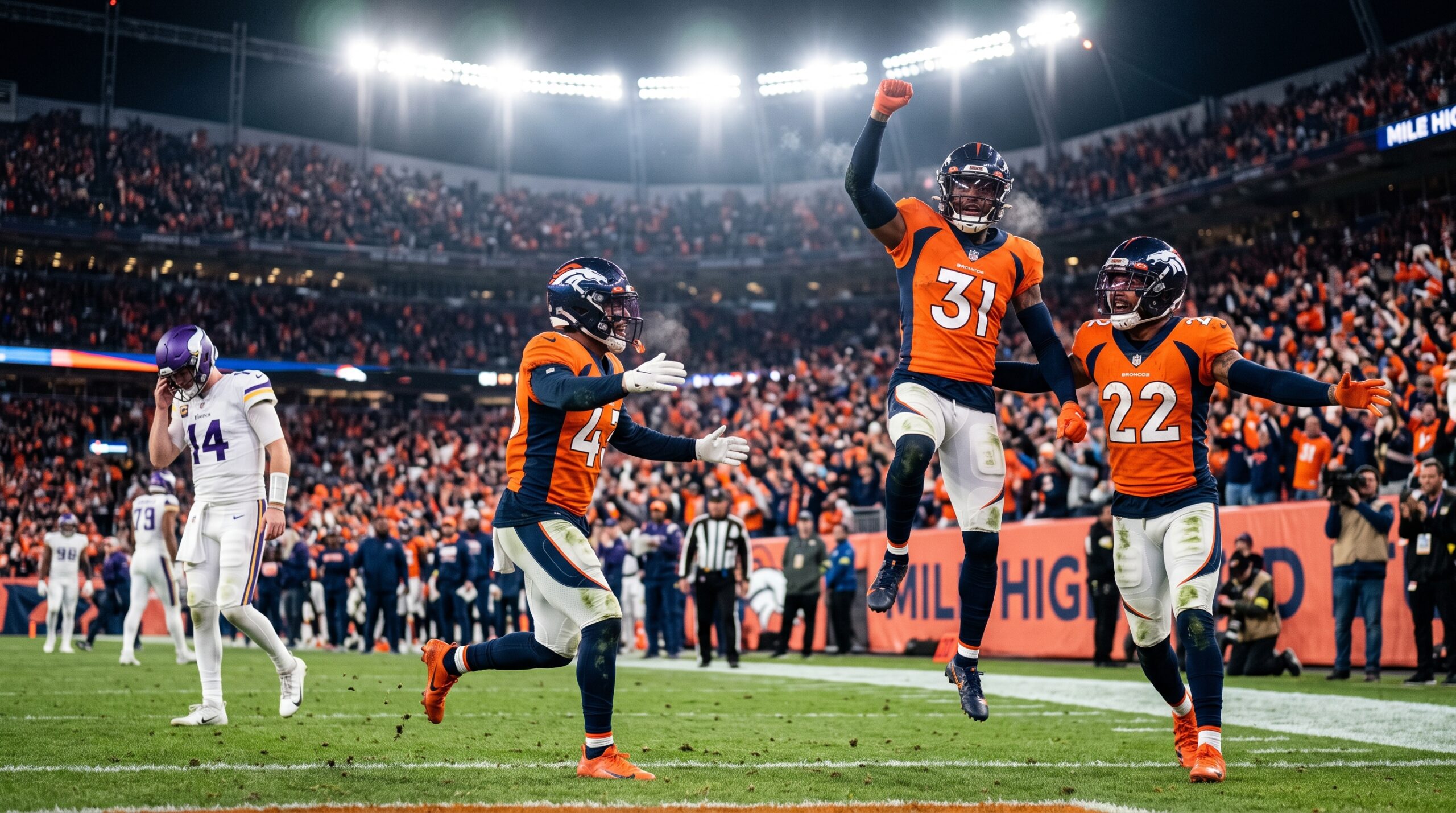
You know that feeling when a team looks dead in the water, then suddenly finds life in the final minutes? The Seattle Seahawks did exactly that on Thursday night. They erased an 11-point deficit, forced overtime, and still walked out of Empower Field with a loss. The Denver Broncos survived 17-14 because their defense refused to quit and Sam Darnold made the costly mistakes that decided it.
Wil Lutz’s 53-yard field goal in overtime ended it. Ja’Quan McMillan’s interception set it up. For a Broncos team that managed just 168 total yards and went quiet after the first half, this one felt like pure survival. For the defending Super Bowl champion Seahawks, it was another night where turnovers undid everything else.
This Thursday Night Football clash in NFL Week 6 had everything: early control, a late collapse, and a finish that left both sides with plenty to sort out.
How Denver Built the Early Lead
The Broncos looked sharp when it mattered most in the first half. They put together two long scoring drives that set the tone.
A 16-play, 74-yard march ended with J.K. Dobbins punching it in from four yards out. That was Denver’s longest drive of the season. Then came a nine-play, 79-yard answer that finished with RJ Harvey’s one-yard touchdown run. Suddenly it was 14-3 and the home crowd believed.
Bo Nix was efficient enough on those two series. He did not need to be spectacular. Sean Payton’s play-calling kept the chains moving with a heavy dose of the run game. The Seahawks had no answer early. Their offense managed a field goal and little else while the Broncos controlled the clock and the line of scrimmage.
Those two drives were the only real offensive production Denver produced all night. Everything after that became a test of whether the defense could hold.
The Defense That Would Not Break
Denver’s front seven spent the evening in Sam Darnold’s face. Five sacks. Seventeen quarterback hits. Constant pressure that forced hurried throws and bad decisions.
The secondary joined the party with two interceptions. Kris Abrams-Draine picked Darnold at the Denver 30 with 1:25 left in regulation, a play that should have sealed the win. Then in overtime McMillan stepped in front of a pass intended for Rashid Shaheed at the Broncos’ 43. That takeaway flipped the field and set up the winning kick.
Even when the Seahawks finally found rhythm late, the Broncos’ defense kept finding ways to limit the damage. They played 82 snaps and still had enough left to force the decisive mistake. For a unit dealing with injuries, this was a statement performance against the reigning champions.
Seattle’s Late Rally and the Missed Opportunities
The Seahawks looked finished until the fourth quarter. Then they woke up.
An 11-play, 67-yard drive ended with George Holani’s one-yard touchdown run. Darnold found Shaheed for the two-point conversion, cutting the deficit to 14-11 with 5:41 left. Momentum had fully shifted.
After the Broncos went three-and-out, Seattle got the ball back near midfield thanks to a strong punt return. They drove into field-goal range and Jason Myers tied the game at 14 with a 34-yard kick and three seconds remaining. Overtime felt inevitable.
Yet the same problems that plagued Seattle all night resurfaced. Darnold’s first interception came with a chance to take the lead late in regulation. The second one in overtime ended any hope of a comeback. Two picks and a lost fumble earlier in the game proved too much to overcome against a defense that kept creating pressure.
Jaxon Smith-Njigba was excellent with 12 catches for 134 yards. The supporting pieces were there. The critical throws were not.
Bo Nix and the Quiet Offense
Nix finished 17-of-27 for just 107 yards. Zero touchdowns. The Broncos punted on nearly every second-half possession. After those two early scoring drives, the offense produced almost nothing.
Payton had taken back play-calling duties, and the early results looked promising. The later results looked stuck. Denver ran the ball more than it threw it and still could not sustain drives once Seattle adjusted. The offense became a liability that the defense had to cover.
Still, the Broncos improved to 4-2 and stayed perfect at home. They also remained undefeated in one-score games this season. Ugly wins count the same as pretty ones in the standings.
What the Mistakes Mean for Both Teams
Darnold now has seven interceptions through six games. Seattle has 12 turnovers total. Those numbers are hard to ignore for a team that won the Super Bowl last season with cleaner football. The Seahawks fell to 3-3 and matched their entire loss total from the previous year in just six weeks.
Denver has its own concerns. An offense that disappears for long stretches will eventually cost them against stronger competition. The defense cannot be asked to win every game by itself. Payton knows it. The players know it. The next few weeks will show whether they can fix the finishing problems.
Both teams leave this game with clear work to do. The Broncos head to Arizona to face the Cardinals. Seattle hosts the Kansas City Chiefs on Sunday Night Football. The margin for error is shrinking for both.
The Bigger Takeaway From a Chaotic Night
This was classic early-season NFL football. One team controlled the first half. The other controlled the final minutes of regulation. A single mistake in overtime decided everything.
The Broncos found a way. Their defense created the takeaways. Lutz delivered when the moment arrived. For a team that has specialized in close wins, this one fit the pattern perfectly.
Seattle showed fight. They just could not protect the football when the game was on the line. In a league this tight, those mistakes decide standings more often than talent gaps do.
If you watched the whole thing, you saw a game that refused to follow a clean script. That is usually when the most revealing football happens. Both sides revealed exactly where they still need to improve.
The Broncos are 4-2 and still finding ways to win the tight ones. The Seahawks are 3-3 and searching for the consistency that carried them to a title last year. Thursday night gave both a clear snapshot of their current reality.
FAQ
1. What was the final score of the Broncos-Seahawks game?
Denver won 17-14 in overtime. Wil Lutz’s 53-yard field goal provided the deciding points after Ja’Quan McMillan’s interception.
2. How did Sam Darnold perform?
He completed 27 of 51 passes for 278 yards, zero touchdowns, and two interceptions. The late picks, especially the one in overtime, directly cost Seattle the game.
3. Why did the Broncos’ offense struggle so much after the first half?
After two long touchdown drives, Denver managed almost no sustained production. They punted repeatedly, finished with only 168 total yards, and relied entirely on the defense and special teams to close it out.
4. What does this result mean for both teams’ records?
The Broncos improved to 4-2. The Seahawks fell to 3-3, matching their full-season loss total from their Super Bowl-winning year in just six games.
5. Who were the key defensive players for Denver?
The pass rush recorded five sacks and 17 quarterback hits. Kris Abrams-Draine and Ja’Quan McMillan each had interceptions, with McMillan’s overtime pick setting up the winning field goal.
Leave a Reply