
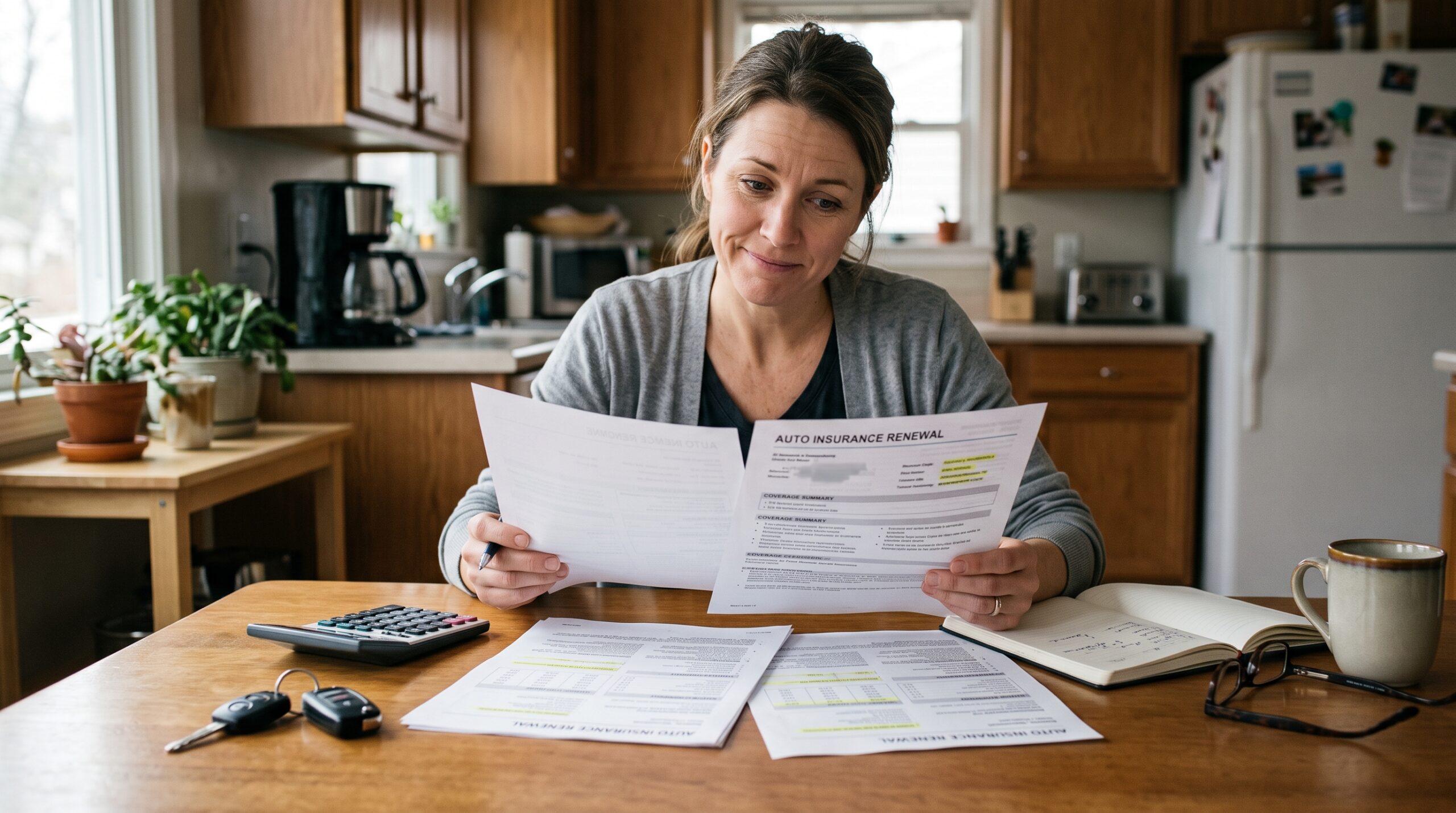
You open the renewal and the increase is smaller than last year. In some cases the premium even edges down. After several years of sharp hikes, that feels like relief. National data now show motor vehicle insurance prices running about five percent lower than a year earlier. The long upward march has paused.
Do not mistake the pause for a permanent reset. The same forces that drove rates higher—repair costs, claims severity, and the industry’s need to restore profitability—have not disappeared. What we are seeing is a classic soft turn in the insurance cycle. Soft turns rarely last forever, and the underlying cost pressures remain.
The Relief Is Real but Partial
The Bureau of Labor Statistics index for motor vehicle insurance has posted year-over-year declines for several consecutive months. Major carriers that raised rates aggressively in 2023–2025 are now competing more actively for volume. Progressive and others have shown improved combined ratios while still growing policy counts. In a more competitive environment, some of that improvement reaches consumers in the form of flatter or slightly lower renewals.
Yet the absolute level of premiums remains well above where it stood before the post-pandemic surge. A five percent decline from an elevated base still leaves most drivers paying substantially more than they did four or five years ago. The celebration, if any, should be muted.
Why Rates Climbed So Far in the First Place
Repair costs rose faster than general inflation. Parts, labor, and the complexity of modern vehicles all contributed. Accident severity increased. Insurers that had priced for a lower-loss world found themselves under-reserved and under-priced. The response was a multi-year campaign of rate increases that finally restored margins.
Once profitability returned, the incentive shifted. Carriers that had pulled back on growth began competing again. That competition is what produces the current cooling. It is a rational market reaction, not a structural reduction in the cost of providing coverage.
The Cycle Has Not Been Repealed
Property-casualty insurance moves in cycles. Hard markets feature rising rates, tighter underwriting, and improving results for carriers. Soft markets feature increased competition, slower rate growth or actual decreases, and eventual pressure on margins. We have entered the softer phase.
History shows these phases do not last indefinitely. When claims inflation re-accelerates, or when investment returns or catastrophe losses change the capital picture, the industry tightens again. Drivers who treat today’s flatter renewals as the new normal may be surprised when the next hard market arrives.
What Could Push Rates Higher Again
Several factors remain capable of reversing the current relief. A sustained rise in repair costs or used-vehicle prices would quickly pressure loss ratios. An uptick in accident frequency, whether from more driving, distraction, or other behavioral shifts, would do the same. Severe weather or other catastrophe activity that hits auto and related lines can also tighten the market.
Regulatory actions that limit carriers’ ability to price risk accurately can have the opposite of the intended effect over time. When pricing becomes detached from expected costs, capacity eventually withdraws and residual markets grow—exactly the pattern visible in some homeowners lines.
How Drivers Should Use the Current Window
The practical response is straightforward. Shop. The competitive environment rewards drivers who obtain fresh quotes at renewal rather than accepting the first offer. Small differences in underwriting appetite between carriers can produce meaningful savings when the market is softer.
Review coverage limits and deductibles with clear eyes. Higher deductibles still reduce premiums, but only if the emergency fund can absorb the extra out-of-pocket risk. Discounts for safe driving, multi-policy arrangements, and newer safety features remain worth confirming.
Do not assume the relief will deepen automatically. A flat or slightly lower renewal is a good outcome in the current environment. Expecting a rapid return to 2019 pricing levels is unrealistic.
The Longer View

Insurance pricing follows costs and competition. Costs remain elevated relative to the pre-surge period. Competition has increased because margins improved. That combination produces the cooling we see now. It does not eliminate the possibility of another hardening phase when conditions change.
Drivers who treat the current market as a temporary window rather than a permanent shift will be better prepared. Obtain competitive quotes. Keep records clean. Maintain the emergency capacity to handle a higher deductible if that trade-off makes sense. And recognize that the industry’s recent profitability, while welcome for rate stability, also sets the stage for the next competitive battle—and eventually the next cycle turn.
Rates are cooling. The underlying math of auto insurance has not been rewritten. Staying alert remains the wiser stance.
FAQ
1. Are auto insurance rates actually going down in 2026?
On the national CPI measure, yes. Prices were roughly five percent lower in recent months than a year earlier. Absolute premiums, however, remain well above pre-2022 levels.
2. Why are rates cooling after years of big increases?
Insurers restored profitability through earlier rate hikes. With better margins, competition for customers increased, which moderates further increases and produces some declines.
3. Will the relief continue?
It depends on claims trends, repair costs, and how aggressively carriers compete. Soft markets do not last indefinitely. A re-acceleration in losses could reverse the current direction.
4. Should I switch insurers right now?
It is worth obtaining multiple quotes at renewal. In a more competitive market the differences between carriers can be larger than they were during the hardest years.
5. What is the biggest risk that rates rise again?
A sustained increase in repair costs or accident severity would pressure loss ratios and likely prompt carriers to tighten pricing once more.
Leave a Reply