
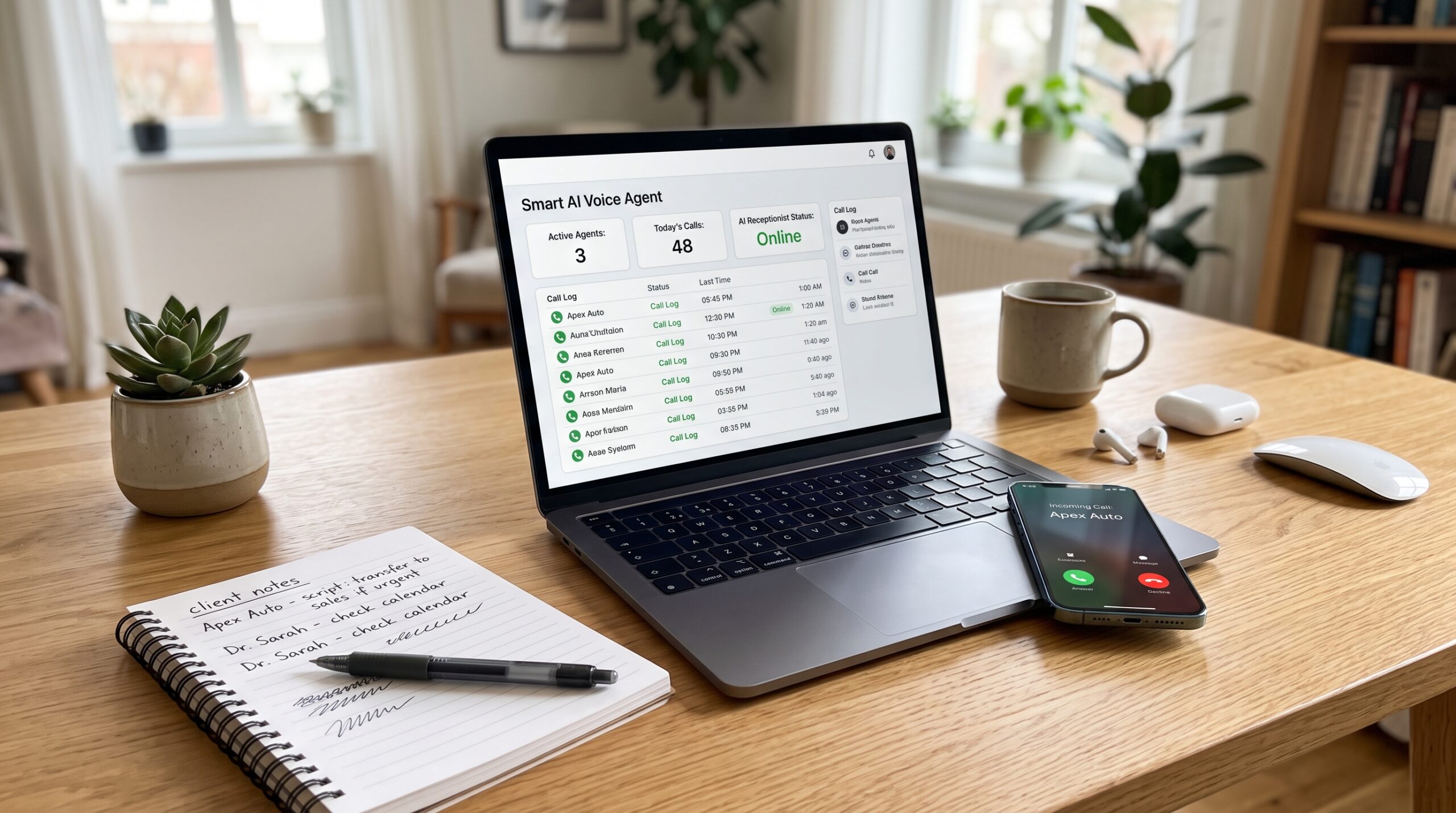
You run a small business or help others run theirs and watch the same problem repeat. The phone rings while someone is with a customer, on a job site, or simply away from the desk. The call goes to voicemail. The lead disappears. Multiply that by dozens of local plumbers, dentists, law firms, and salons, and you see why AI receptionist and answering services have exploded in demand. In 2026 this remains one of the clearest low-cost ways to build a profitable service business with real recurring revenue.
Why This Opportunity Keeps Growing
Small businesses still miss a large share of incoming calls. Surveys and call data from 2026 show that many service companies lose potential jobs every week simply because no one picks up. An AI voice agent answers 24/7, qualifies the caller, books appointments, takes messages, and routes urgent issues. The technology has become reliable enough that callers often cannot tell the difference on routine interactions.
Search interest for “AI receptionist” and related terms has surged into the hundreds of thousands of monthly queries in the US alone. Platforms that power these agents have dropped in cost and risen in quality. The result is a service you can sell at a comfortable margin while still undercutting traditional human answering services.
How the Business Model Actually Works
Most operators follow a simple structure. You charge a one-time setup fee to configure the agent for the client’s scripts, calendar, and common questions. Then you charge a flat monthly retainer—commonly $300 to $800 for a typical small business location. Some add usage-based pricing for high-volume clients.
Your underlying costs sit much lower. Voice platforms bill by the minute, often in the range of a few cents to around fifteen cents depending on the model and voice quality. A client generating a few hundred minutes per month might cost you $30–$150 in platform fees. The rest is margin. Once the agent is tuned, ongoing work is mostly monitoring transcripts and making small improvements.
Getting Started Without Heavy Technical Skills
You do not need to build models from scratch. Tools such as Retell, Vapi, ElevenLabs Agents, HighLevel Voice AI, and similar platforms let you create functional agents with no-code or low-code interfaces. Many connect directly to Google Calendar, Calendly, or popular CRMs.
Start by picking one vertical you understand—home services, dental offices, legal intake, or salons work well. Collect a week of real call recordings or notes from a friendly business owner. Turn those into clear conversation flows: greeting, qualification questions, booking logic, and escalation rules. Test on real calls before going live. Keep the client’s existing phone number and forward after-hours or overflow traffic first so the transition feels low-risk.
Pricing and Sales That Convert
Anchor the price to the cost of a missed job, not to the technology. One extra booked appointment a month often covers the entire monthly fee several times over. Offer a clear human escalation path so the client never feels locked into pure AI. Bundle setup and the first month of tuning so the buyer sees immediate value.
Hypothetical example: an operator focused on HVAC companies charged $497 setup plus $497 per month. After three months of refining the scripts around emergency vs. routine calls, the average client recovered more than enough revenue from previously missed evening and weekend inquiries to justify the expense. Referrals followed because the results were visible.
Common Pitfalls and How to Avoid Them
Over-promising is the fastest way to lose clients. AI still struggles with highly emotional or complex conversations. Be honest about what the agent handles well and what gets transferred. Poor fit testing or weak scripts produce robotic interactions that damage the client’s brand. Spend time on natural language and real edge cases.
Another trap is going too broad too soon. Serving five different industries at once dilutes your expertise. Dominate one niche, collect case studies, then expand. Monitor call quality weekly at the beginning. Small prompt adjustments often produce large improvements in booking rates.
Scaling From Solo Operator to Agency
Once you have ten to fifteen stable clients, the business becomes highly leverageable. Standardize onboarding templates. Hire a part-time person to review transcripts and handle basic client requests. Add SMS follow-up or simple outbound reminder agents as upsells. Some operators white-label the service and sell through existing marketing or IT agencies that already serve the same verticals.
Cash flow is front-loaded with setup fees and then predictable with monthly retainers. Churn stays low when the agent demonstrably books jobs the client would otherwise have lost. The limiting factor is usually sales capacity rather than technology.
Is This Still Worth Starting in Late 2026?

Yes—if you treat it as a service business rather than a pure tech play. The tools are accessible, demand remains strong among local service businesses, and the unit economics favor the operator who can sell and support the solution. Competition exists, yet most small businesses still do not have a well-tuned AI receptionist. The gap between “we should look into that” and “we have one that works” is where the opportunity lives.
Pick a niche you can reach, master one reliable platform, and start with a handful of pilot clients. Price for the value of recovered calls. Keep improving the conversation quality. The combination of low startup cost, high margins, and clear pain points makes AI receptionist and answering services one of the more practical business opportunities available right now. Begin with one real client and real call data. Everything else compounds from there.
FAQ
How much does it cost to start an AI receptionist service business?
Platform costs can begin under $100 per month for testing. A professional setup for the first few clients typically requires a few hundred dollars in tools and time. Total startup cash can stay under $1,000 if you already have basic business infrastructure.
What monthly revenue can a solo operator realistically reach?
Many operators report $10,000–$20,000 in monthly recurring revenue with 20–40 small-business clients once the service is established. Results depend on pricing, niche, and sales effort.
Do I need coding skills?
No. Current no-code and low-code voice platforms handle the core functionality. Comfort with configuration, testing, and basic integrations is enough for most SMB deployments.
Which industries buy fastest?
Home services (plumbing, HVAC, electrical), dental and medical clinics, law firms, salons, and other appointment-driven local businesses show the strongest and fastest adoption.
How do I handle clients who worry about AI sounding robotic?
Use high-quality voices, write natural scripts based on real calls, and always provide a clear path to a human. Demonstrate the live agent on the prospect’s own common call types during the sales process.
Leave a Reply