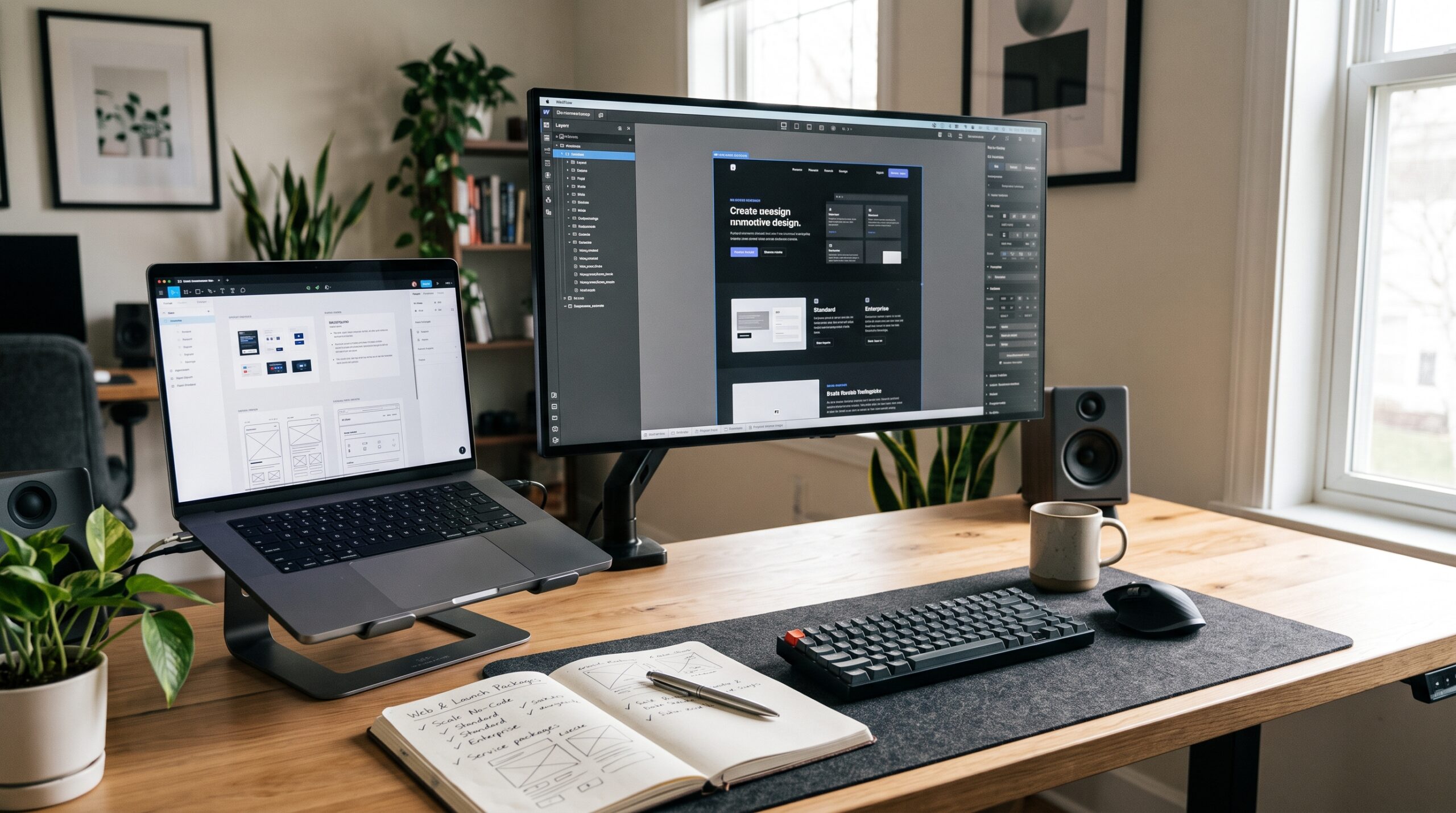
You watch freelancers and small agencies charge thousands for websites and simple apps while you hesitate because you cannot code. That barrier has largely disappeared. In 2026 a focused no-code studio can deliver professional sites and functional web apps using tools that require design sense and process more than programming knowledge. This model lets you start lean, productize your offers, and grow into a real agency without a large technical team.
Why No-Code Studios Still Work in 2026
Clients still need websites that look current, load fast, and convert. Many also want lightweight client portals, booking systems, or internal tools. Traditional development remains expensive and slow for these projects. No-code platforms have matured enough that a skilled operator can produce results that satisfy most small and mid-sized businesses.
The opportunity sits in specialization and packaging. Generic “we build websites” shops compete on price. Studios that own a clear niche—local service businesses, coaches, professional firms, or membership sites—command better rates and attract repeat work. Speed of delivery becomes a selling point when you can launch in days instead of months.
Choosing the Right Tools for the Work You Want
Different platforms suit different project types. Webflow remains strong for marketing sites with structured content and solid SEO control. Framer excels at fast, design-forward landing pages and visual interaction. Bubble handles more complex web applications with databases, user accounts, and workflows. Softr and Glide work well for client portals and data-driven tools built on existing spreadsheets or Airtable.
Pick one or two platforms and go deep rather than dabbling in everything. Mastery of a single tool lets you move faster, create reusable templates, and troubleshoot with confidence. Many successful studios run almost entirely on Webflow for sites and one app builder for functional projects.
Building a Productized Service Menu
Hourly billing limits growth. Productized packages create clarity for clients and predictability for you. Offer a starter marketing site, a content-driven site with CMS, a membership or portal setup, and a simple booking or directory app. Publish clear scope, timelines, and prices. Add optional monthly retainers for updates, content help, or performance monitoring.
Hypothetical example: a studio focused on home-service companies sold a fixed “Service Business Site + Booking” package. The template covered service pages, testimonials, and a simple scheduling integration. Delivery time dropped, margins rose, and clients referred others because the offer was easy to understand and fast to receive.
Finding Clients Without a Big Marketing Budget
Start with people you already know or local businesses that need a better online presence. Offer a limited number of founding-client discounts in exchange for testimonials and case studies. Use your own no-code site as living proof. Content that shows before-and-after results or simple process videos attracts inbound interest over time.
Partnerships work well. Accountants, marketing freelancers, and business coaches often meet clients who need digital presence but do not want to manage the build themselves. A clean referral arrangement expands reach without paid ads at the beginning.
Delivery Systems That Scale Beyond One Person
Document every step—discovery questions, design checklist, content collection, QA, and launch. Templates and component libraries cut build time dramatically. Once demand exceeds your capacity, bring on freelance designers or no-code specialists who already know the same platforms. You stay focused on sales, strategy, and client relationships while production becomes repeatable.
Retainers turn one-off projects into ongoing revenue. Many clients need small updates, new pages, or seasonal changes. A modest monthly fee for a set number of hours or tasks smooths cash flow and deepens the relationship.
Pricing, Margins, and Realistic Growth Path
Project fees for professional no-code sites often range from a few thousand dollars for simpler packages to higher amounts for custom app work. Platform costs remain low relative to the value delivered. After covering tools and any contractor help, healthy margins are achievable when scope stays controlled.
Growth usually follows a pattern: first solo projects, then a small roster of reliable freelancers, then productized offers and retainers that reduce sales pressure. Some studios later add complementary services such as basic SEO, conversion tweaks, or simple automations. The key is staying disciplined about what you accept so quality and timelines stay intact.
Common Mistakes That Slow Studios Down
Scope creep destroys margins. Clear contracts and change-order processes protect both sides. Over-customizing every project prevents template leverage. Trying to serve every industry dilutes expertise and marketing focus. Neglecting your own site and case studies makes selling harder than it needs to be.
Another frequent issue is under-pricing early work. Low rates attract price-sensitive clients who often demand the most. Set rates that reflect the speed and professionalism you deliver, then adjust as your proof points grow.
No-code tools have lowered the technical barrier, yet they have not removed the need for good process, clear communication, and solid design judgment. A focused studio that productizes its offers, owns a niche, and builds repeatable delivery can grow into a sustainable digital agency. Start with one platform, one clear package, and a handful of real clients. Refine the system with each project. The path from solo operator to scalable studio is open to people who treat no-code as a serious craft rather than a shortcut. Begin with the next client who needs a better website or simple app and build from there.
FAQ
Do I need any coding knowledge to run a no-code studio?
Basic HTML or CSS awareness helps for fine-tuning, but many successful operators start with strong design and organizational skills and learn the platforms as they go. Deep programming is not required for most client work.
Which no-code platform should I learn first?
Webflow is a strong starting point for marketing and content sites. If your target clients need functional apps with user accounts or databases, explore Bubble or a combination of frontend and backend no-code tools.
How much can I charge for a no-code website?
Pricing varies by market and package complexity. Many studios successfully charge several thousand dollars for professional marketing sites and more for custom functional builds. Productized packages make pricing clearer for both sides.
Can this model support full-time income?
Yes. Operators who productize services, maintain retainers, and control delivery costs regularly reach comfortable full-time revenue. Growth depends on sales consistency and operational discipline more than technical wizardry.
What is the biggest risk when starting?
Underestimating the work of client communication, content collection, and revisions. Strong processes and clear scope documents reduce that risk more effectively than any single tool.
Leave a Reply