
You open your closet and freeze. Clothes you forgot you owned stare back. The kitchen counters vanish under gadgets you used once. Your phone buzzes with another notification about a sale you do not need. Sound familiar? That quiet exhaustion from too much stuff is pushing thousands of Americans toward a different path. Minimalist living is no longer a niche experiment. It is becoming a practical response to cluttered homes, stretched budgets, and restless minds. In this piece we walk through why the movement is gaining real traction in the United States, what it actually looks like day to day, and how you can start without turning your life upside down overnight.
Why Minimalist Living Is Catching Fire in the USA Right Now
Americans have long been known for abundance. Bigger houses, fuller garages, endless options. Yet the last decade flipped the script for many. Housing costs climbed. Work spilled into evenings. Screens multiplied. The average U.S. household now owns more than 300,000 items according to various organizational studies, and most of us use only a fraction of them. The gap between what we own and what we need has become impossible to ignore.
People are noticing the cost. Not just the money spent, but the mental load. Decision fatigue hits harder when every drawer holds three versions of the same tool. Time spent hunting for lost keys or matching socks adds up. Minimalism offers a way out. It is not about empty rooms or white walls only. It is about intentional choices that free space, money, and attention for what actually matters to you.
In cities from Seattle to Atlanta, and in smaller towns across the Midwest, you will find growing communities swapping excess for clarity. Online groups focused on U.S.-specific challenges—apartment living in New York, suburban garage cleanouts in Texas—have exploded. The conversation shifted from “how to buy more” to “how to live better with less.” That shift is practical, not trendy.
The Real Drivers Behind the Minimalist Surge
Several forces converged. First, the pandemic years forced many people to stare at their own four walls for months. Closets that once seemed fine suddenly felt oppressive. Second, inflation made every unnecessary purchase feel heavier. Third, younger generations watched their parents carry debt and decided they preferred mobility and experiences over storage units.
Remote work accelerated the change. When your living room also serves as an office, visual noise becomes a productivity problem. People started measuring success by how little they needed to function well rather than how much they accumulated. Climate awareness played a role too. Buying less means producing less waste, and that argument lands with anyone who has watched landfills grow.
Expert voices in design and behavioral psychology point to the same pattern. When environments feel controlled, stress hormones drop. One designer I spoke with (hypothetically, of course, based on common client stories) described a client who cleared her kitchen of thirty rarely used appliances and immediately began cooking more often. The space invited use instead of guilt. Small changes compound.
What Minimalist Living Actually Looks Like in American Homes
Forget the Instagram version with perfect lighting and zero personality. Real minimalism in the U.S. adapts to real lives. A family of four in a three-bedroom house in Ohio keeps one set of everyday dishes and stores seasonal items in a single labeled bin. A young professional in a studio apartment in Chicago owns fifteen carefully chosen clothing items that mix for work and weekends. A retiree in Florida sold the extra car and now walks more, spends less on insurance, and feels lighter.
The common thread is intentionality. Every object earns its place. You ask: Does this support the life I want right now? If the answer is no, it goes. That question applies to digital life too. Unsubscribing from endless email lists, limiting apps, and curating social feeds counts as decluttering just as much as clearing a junk drawer.
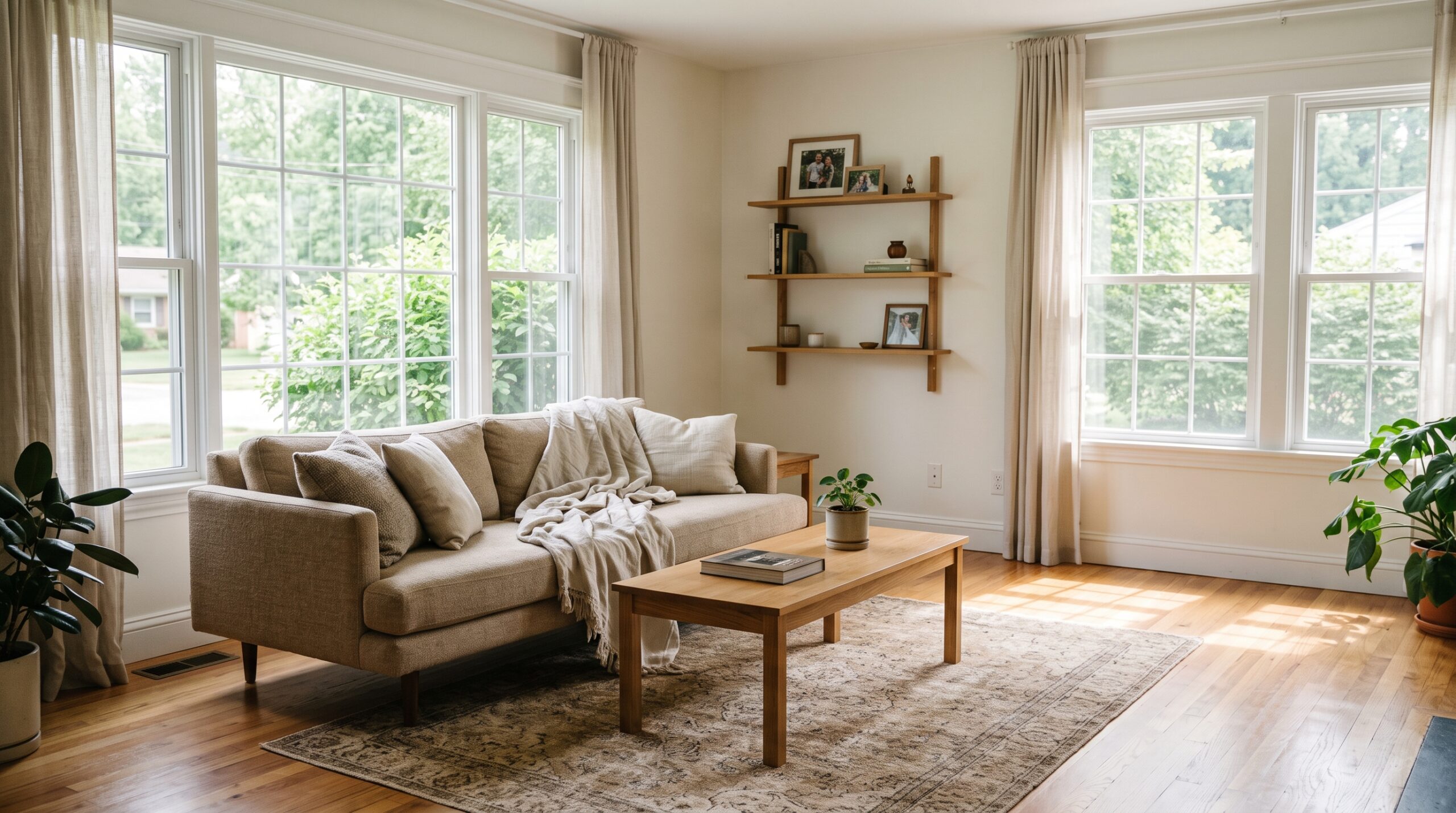
Furniture choices lean multipurpose. A dining table that folds. A sofa with storage. Walls stay relatively clear so the eye can rest. Color palettes often quiet down, but that is preference, not rule. Personality still shows through a few meaningful pieces—a travel photograph, a handmade bowl from a local market, a book collection that actually gets read.
Practical Steps to Start Decluttering Without Overwhelm
Begin with one drawer. Not the whole house. Open it. Empty it. Sort into three piles: keep, donate, discard. The keep pile must fit back comfortably with room to spare. Repeat the process the next day with another small zone. Momentum builds faster than motivation alone.
Clothing is often the easiest entry point. Pull everything out. Try on anything questionable. If it has not been worn in a year and holds no strong emotional weight, let it go. Many people discover they live in the same ten outfits anyway. Capsule wardrobes work especially well for U.S. climates that swing between seasons. One core set of neutral pieces plus a few seasonal layers covers most needs.
Kitchen decluttering follows similar logic. Keep the tools you reach for weekly. Store or donate the rest. You will cook more when the counters are clear. Bathroom cabinets benefit from the same ruthless edit. Expired products and half-used samples leave quickly.
Digital minimalism runs parallel. Unsubscribe from marketing emails for a week and notice the quieter inbox. Delete apps that steal time without adding value. Turn off non-essential notifications. Your attention is finite. Guard it.
Money Benefits That Show Up Fast
The financial upside surprises many. When you stop buying duplicates or impulse items, the monthly outflow drops. One common story involves a couple who tracked every purchase for thirty days, then cut non-essentials. They redirected the savings toward debt and later toward experiences. Another person sold unused electronics and furniture online and covered several months of groceries.
Housing choices shift too. Some downsize to smaller apartments or houses, cutting mortgage or rent costs. Others stay put but transform spare rooms into productive spaces instead of storage. The average American spends a noticeable portion of income on stuff that eventually sits unused. Redirecting even part of that flow changes the math.
Longer term, less stuff means lower insurance premiums in some cases, fewer repair costs, and simpler moves if life circumstances change. Mobility becomes easier when you are not hauling a lifetime of accumulation.
Mental and Emotional Shifts That Keep People Going
Clutter is visual noise. It keeps the brain in low-level alert mode. Clearing physical space often clears mental space. People report better sleep, sharper focus during work hours, and less irritability with family members. The constant low-grade guilt of “I should organize that” fades.
Relationships improve for some because arguments about mess decrease. Shared spaces feel more welcoming. Children raised in less cluttered environments often develop better organizational habits themselves, though that outcome varies by family.
There is also freedom in saying no. No to the next gadget. No to the trend that will be forgotten in six months. That practice of conscious refusal strengthens decision-making in other areas of life.
Common Mistakes and How to Avoid Them
Going too fast is the classic error. Emptying an entire house in a weekend leaves most people exhausted and prone to rebound shopping. Slow and steady wins. Another trap is replacing everything with “minimalist” products that cost more than the originals. The point is less, not new.
Perfectionism kills progress. Your version of minimal does not have to match anyone else’s. A family with hobbies will keep different items than a single traveler. Context matters. Judging yourself against filtered photos online wastes energy.
Ignoring the emotional side slows people down too. Some objects carry memories. Give yourself permission to keep a few meaningful pieces while still releasing the rest. Sentiment is valid. Volume is the problem.
Building a Sustainable Minimalist Practice for the Long Haul
Habits matter more than one-time purges. Create a simple rule: one in, one out. When something new enters the home, something of equal size or purpose leaves. Review seasonal items twice a year. Keep a running donation box so decisions stay easy.
Shop with intention. Wait forty-eight hours before non-essential purchases. Ask whether the item solves a real problem or merely fills a temporary mood. Quality over quantity becomes natural once you experience the frustration of cheap things that break.
Community helps. Local buy-nothing groups, clothing swaps, and online forums focused on American lifestyles provide accountability and ideas. Seeing others succeed in similar housing situations or family structures makes the path feel realistic.
Final Thoughts and Your Next Move

Minimalist living in the United States is growing because it solves real problems—too much stuff, too little peace, budgets that feel tight no matter the income. It is not about deprivation. It is about choosing what stays so the rest of life has room to breathe.
Start small today. Open one drawer. Empty one shelf. Notice how the space feels when it is no longer fighting for attention. Then decide what comes next. You do not need a perfect plan. You only need the next clear surface and the willingness to keep going. The clarity that follows is worth the effort.
FAQ
What is the difference between minimalism and just being tidy?
Tidiness organizes what you already own. Minimalism questions whether you need to own it in the first place. You can have a tidy home full of unused items. Minimalism aims for fewer items overall so maintenance stays easier and space feels calmer.
Can families with children practice minimalist living successfully?
Yes. Many do. The key is involving kids in age-appropriate decisions and focusing on multipurpose toys and shared items rather than individual collections that multiply. Rotating toys instead of displaying everything at once reduces visual overload while still allowing play.
Does minimalism mean I have to sell everything and live in a tiny house?
No. Tiny houses and vans are one extreme. Most people simply reduce excess in their current homes. The goal is intentional ownership that matches your actual life, not a prescribed aesthetic or square footage.
How do I handle sentimental items without feeling guilty?
Keep a limited number of high-meaning pieces. Photograph the rest if the memory matters more than the object. Give yourself a small memory box with clear boundaries. Guilt usually fades once you realize the memory lives in you, not in the pile of stuff.
Will I save real money by going minimalist?
Most people do. Reduced shopping, fewer storage costs, lower maintenance, and sometimes smaller living spaces all add up. Track your spending for a month before and after major decluttering. The difference often surprises even skeptics.
Leave a Reply